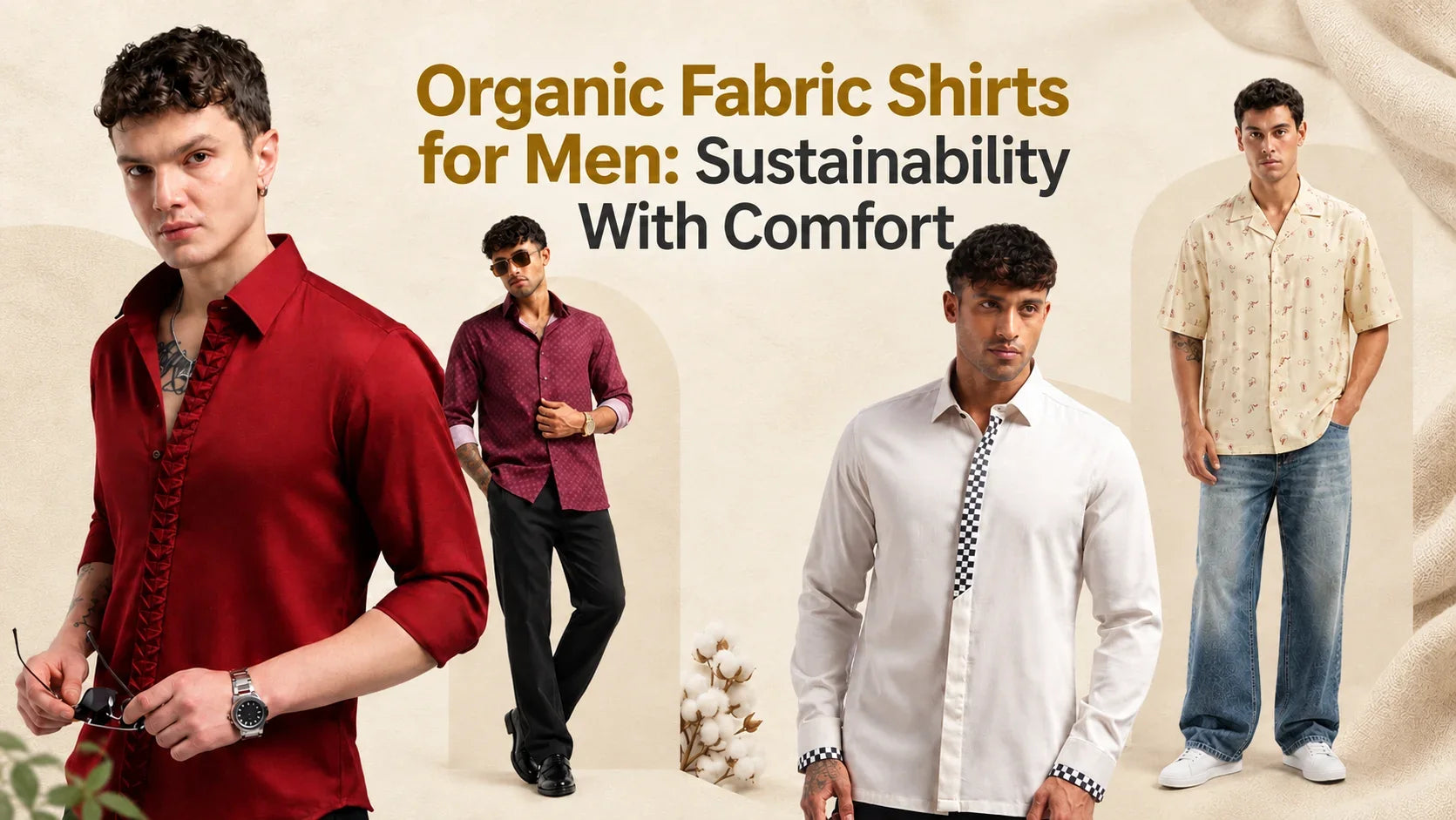
Have you ever felt a love-hate relationship with a shirt purchased from the store as it loses its charm by the time you take it through your third wash cycle?
It is for this reason that shirts made from organic or naturally processed fabrics stand tall. They are better for the skin, allowing you to breathe easily. Here's a quick guide to organic fabric shirts, their strength compared to regular cotton shirts and how you can choose a shirt that really suits the Indian weather.
What Makes a Shirt Organic and Why It Matters for Men's Fashion
The organic shirt is manufactured using natural fabrics which contain significantly fewer chemical substances during their growth and processing in comparison with conventional fabrics. In other words, an organic shirt provides comfortable threads, proper ventilation, and zero chances of irritation of your skin.
Organic Cotton VS Traditional Cotton Shirts: How Do They Actually Differ?
Both types of shirts originate from the same material. The crucial distinction appears in how this material is handled prior to appearing in your wardrobe.
The cotton used for organic shirts is cultivated without using synthetic chemicals for fertilisation and protection. The amount of residue in the final product is lower accordingly, and regular cotton uses both quite extensively in its production. This is usually seen as a more rough texture and some resistance to skin irritations. There is a silent distinction in the way these cottons are cultivated – organic requires less amount of water and is better for soil health, which will not be visible in a store but will mean a lot for an entire industry.
Are Organic Fabric Shirts More Comfortable Than Regular Shirts?
Honestly, yes and it’s not just a statement used by the brands to justify its high price tag. The fabrics, such as Lyocell or blend linens, allow better air circulation due to the very structure of the fabric itself that allows air to flow instead of holding heat in the clothes against your skin.
The material softens even with each wash, rather than becoming rough, as the harsh chemicals used for treating the fabric in the manufacturing process do wear away.
Why Sustainably Made Shirts are Becoming Popular in Men’s Dressing in India
Today, men have begun to question the material of their shirts, and let me tell you, this was long overdue. One of the factors behind this includes climate; in a country like India, where the weather is extremely hot and humid for most of the year, breathing material stops being a luxury and almost becomes a necessity. The second part is a shift in consumer behavior, where men now prefer quality and quantity over constant supply and quantity.
Organic Fabric Shirts for Summer Do They Keep You Cooler?
They do, and the reason comes down to moisture, not just weave. Lyocell in particular is naturally moisture-wicking; it pulls sweat away from your skin and lets it evaporate quickly instead of leaving that damp, heavy feeling by midday. Linen and linen-blend fabrics work on a similar principle, just through a looser weave that lets air pass through more freely than a tightly packed synthetic blend would.
How to Identify a Genuine Organic Cotton Shirt Before You Buy
Not all “organic” or “eco-friendly” products qualify for the term. Look for certification labels like GOTS, OEKO-TEX. These are the real labels which indicate that a fabric is certified to be organic and/or produced using minimum chemicals rather than a claim by the brand. Also, make sure you take into consideration fabric description where fiber composition and treatment must be specified rather than just stating that the fabric is organic. Finally, use your sense of touch since truly organic or naturally treated fabrics tend to have matte and textured texture rather than shiny one.
Dressing Up Your Organic Cotton Shirts for Work, Relaxation, and Parties
When dressing up for work, a shirt with a loose fit in colors such as taupe and grey can be worn with chinos and even formal trousers and still remain comfortable throughout a whole workday. When going for something casual, a short sleeve shirt in either linen or linen blend and colored in beige or sage green with the sleeves rolled up and little accessories will do just fine for a brunch on a weekend or simply going around town.
Organic Cotton Shirts Versus Traditional Shirts - Which One To Pick?
Organic cotton may be worth considering if your preference lies with comfortable clothing material and if you wish to choose materials consciously. Traditional cotton may still be a good choice, especially if you are in search of a certain kind of finishing, feel, color, or budget.
The cost may also differ. Not everything organic means better quality and expensive means better quality shirts. Take into consideration all features: fabric, construction, finishing, fit, and maintenance.
Final Verdict: Is It Worth Switching to Organic Fabric Shirts?
If comfort, skin sensitivity, or heat are even a small concern for you and for most people living through an Indian summer, switching to organic or naturally processed fabric shirts is worth doing. You get a shirt that softens instead of wearing out, breathes properly, and holds up to the climate without you having to think about it.
Explore MIEIV's Organic Fabric collection, featuring Lyocell, linen-blend, and stretch Lycra shirts, and see what a shirt that actually works with your body, instead of against it, feels like
FAQ
Q1. What is an organic fabric shirt?
A shirt that consists of natural materials, which have been grown or processed using less synthetics compared to regular fabric, thus producing a soft, breathable product that’s kinder to the skin.
Q2. Are organic cotton shirts worth the price?
In most cases, yes, because there may be a slight additional cost at first, but the materials used will typically be more durable and comfortable to wear over a number of washes than non-organic materials.
Q3. Do organic shirts last longer than regular shirts?
Yes, in general. Because of not using the intense chemical treatment which wears out fibers with time, organic fabrics keep their form, texture, and color longer.
Q4. Is organic cotton good for sensitive skin?
Yes - with little to no synthetic pesticide residue and usually a milder dyeing process, organic and naturally processed fabrics are far less likely to cause irritation than conventional ones.
Q5. How should an organic cotton shirt be taken care of?
All that you need to do is use cold to lukewarm water, no high-temperature dryer, and low to medium temperature while pressing with a slight dampness in the material. It is really that easy to maintain its quality.

 Extra ₹200 Off on Prepaid Orders
 COD Available
 All India Free Shipping